
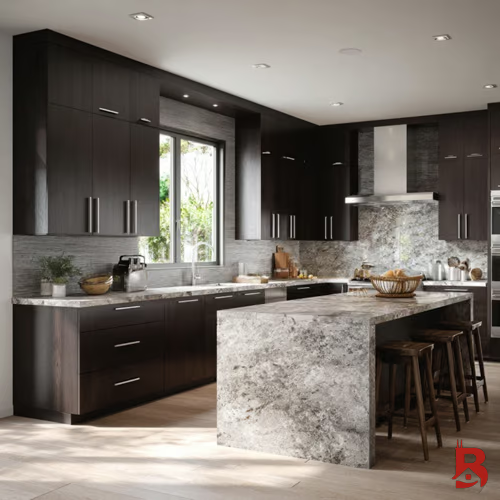
Stock, Semi-Custom, and Custom
Stock cabinets use fixed sizes and a limited finish catalog. They can control cost when the room accepts standard dimensions.
Semi-custom cabinets provide more sizes, finishes, storage accessories, and modifications. They often balance flexibility and budget for complete kitchen renovations.
Fully custom cabinets are built around the room. They are useful for uneven vintage-home walls, unusual ceiling heights, architectural details, integrated appliances, and furniture-style built-ins.
The lowest cabinet purchase price is not necessarily the lowest installed project cost. Extra fillers, field modifications, trim, wall repair, and compromised storage can erase the apparent savings from an ill-fitting system.
The Largest Cost Variables
- Cabinet-box materials and construction
- Painted, stained, laminate, veneer, or specialty finish
- Inset, full-overlay, or other door construction
- Drawer quantity and internal organizers
- Hinges, slides, pulls, and specialty hardware
- Finished ends, appliance panels, crown, light rail, and toe kicks
- Islands, pantry cabinets, tall units, and integrated seating
- Removal and disposal of existing cabinets
- Uneven floors, walls, soffits, and utility conflicts
- Countertop, backsplash, plumbing, and electrical coordination
Built-In Cabinet Pricing
A bookcase, media wall, mudroom, bar, office, or window seat is usually priced by the complete design rather than kitchen-style cabinet count. Site-built trim, scribes, lighting, outlets, ventilation around electronics, wall reinforcement, and paint-grade finish work can be significant parts of the scope.
What a Complete Estimate Should State
The proposal should identify the cabinet line or construction standard, door style, finish, visible panels, hardware, accessories, trim, delivery, installation, demolition, and excluded work. It should also explain who measures, who approves the final layout, and how damage or manufacturing discrepancies are handled.
Allowances should be clearly labeled. “Cabinets included” is not enough information to compare two remodeling proposals.
Where to Invest and Where to Simplify
Invest in sound construction, durable hardware, an efficient layout, and frequently used storage. Simplify seldom-seen decorative accessories before cutting quality from drawers, hinges, or installation. Keeping appliances and plumbing in sensible locations can preserve more of the budget for cabinetry.
Budget Construction Company plans and installs cabinetry as part of coordinated kitchen, bathroom, mudroom, office, and built-in projects. Visit our custom cabinets and built-ins service page or request an estimate.
Frequently Asked Questions
Are custom cabinets always better than semi-custom cabinets?
No. Semi-custom cabinetry can be an excellent choice when its dimensions, finishes, and construction meet the project requirements. Full custom is most valuable when the room or design truly needs it.
Does cabinet pricing include countertops?
Not automatically. Cabinetry, countertops, backsplash, plumbing, electrical work, and appliances should each be identified clearly in the estimate.
Why do old Chicago homes increase installation costs?
Floors and walls may be out of level or square, and soffits, radiators, pipes, and nonstandard openings can require careful fitting and finish carpentry.
Reviewed by the Budget Construction Company Editorial Team
Budget Construction Company has served Chicago homeowners since 1976. Project costs and requirements vary by property, scope, and municipality.