
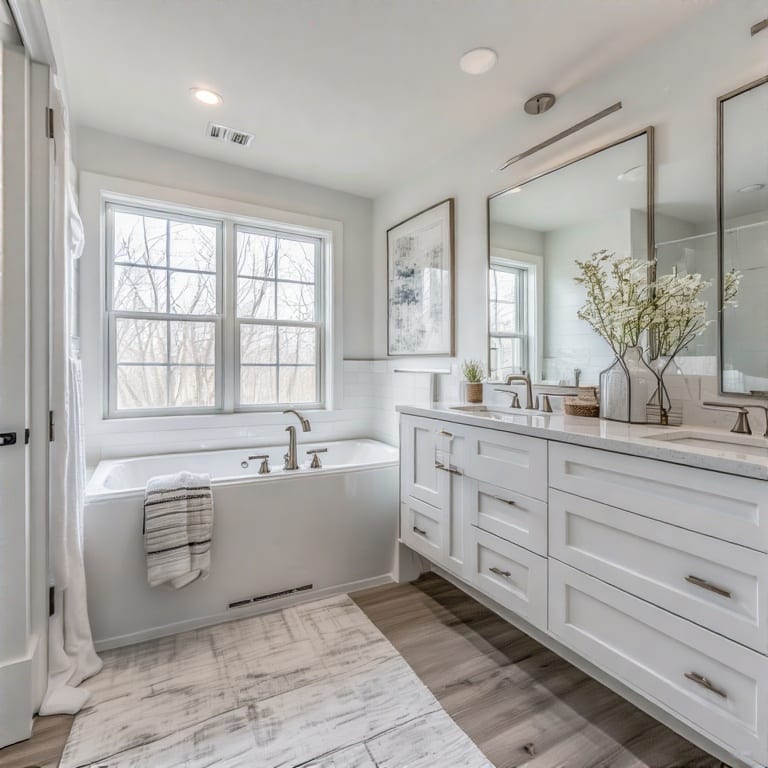
Bathroom remodeling in Chicago has shifted dramatically from purely functional fixture replacements toward creating personal home wellness sanctuaries. Whether adapting a classic 1920s brick bungalow bath, expanding a Victorian greystone master suite, or maximizing square footage in a high-rise condominium, today's design trends blend timeless craftsmanship with modern performance.
Here are the most impactful bathroom design trends shaping Chicago renovations in 2026.
1. Curbless Walk-In Showers & Wet Rooms
The traditional tub-and-shower combo is increasingly being replaced with spacious, open curbless showers.
- Zero-Threshold Entry: Seamless transitions from main bathroom floor to shower floor create an expansive visual line while enhancing universal accessibility (aging-in-place).
- Frameless Glass Enclosures: Heavy 3/8-inch clear tempered glass panels maximize ambient light distribution, making compact Chicago bathrooms feel twice their actual size.
- Linear Drains & Wet Room Concepts: Continuous large-format porcelain tile slopes gently toward concealed perimeter drains, simplifying maintenance and waterproofing.
2. Radiant Floor Heating (Chicago Winter Luxury)
Underfloor electric heating mats (such as Schluter-DITRA-HEAT) have evolved from an exotic luxury into an essential Chicago comfort feature.
- Energy Efficiency: Programmable smart thermostats heat tile surfaces to a comfortable 80°F–84°F during morning routines, using less daily electricity than a standard light bulb.
- Fast Moisture Evaporation: Heated floors quickly dry standing water, significantly reducing humidity, grout discoloration, and mildew risks during humid summers and sub-zero winters alike.
3. Floating Vanities & Integrated Storage Solutions
Visual floor space is vital in Chicago's urban layouts.
- Wall-Hung Vanities: Elevating cabinetry 10 to 12 inches above the floor allows uninterrupted tile visibility and creates space for motion-activated under-cabinet nightlights.
- Deep Drawer Dividers & Recessed Medicine Cabinets: Custom organizers replace cluttered vanity tops. Recessed, backlit LED medicine cabinets sit flush within 2x4 stud walls, providing hidden electrical outlets for toothbrushes and razors.
4. Layered Warm Lighting & Backlit Mirrors
Harsh overhead bar lighting is being replaced by balanced, multi-tier illumination:
- Anti-Fog Backlit Mirrors: Integrated LED halo lighting provides even, shadow-free illumination on faces for grooming while adding a sleek boutique-hotel ambiance.
- Warm Recessed Dimmers: Dedicated 2700K–3000K waterproof downlights inside shower niches and ceiling perimeters create customizable evening relaxation moods.
5. Enduring Natural Finishes & Large-Format Porcelain
- Matte Black & Brushed Brass Accents: High-durability PVD finishes resist hard water spots and complement crisp white and earthy neutral tile palettes.
- Porcelain Slab & 24x48 Tile: Minimizing grout joints not only enhances modern aesthetics but dramatically simplifies ongoing cleaning and prevents moisture penetration.
Frequently Asked Questions
Does removing a bathtub hurt home resale value in Chicago?
If the home retains at least one full bathtub elsewhere on the property (especially for children or guest use), replacing a cramped master tub with a large walk-in luxury shower typically increases property appraisal appeal.
How much does adding heated bathroom flooring cost?
In an average-sized Chicago bathroom (40–70 sq. ft. of walkable floor space), adding a dedicated electric radiant floor heating system with a digital touchscreen thermostat typically adds $1,200 to $2,500 to the tile installation.
Design Your Dream Chicago Bathroom
Since 1976, Budget Construction Company has transformed thousands of Chicago bathrooms with superior craftsmanship, transparent budgeting, and guaranteed project timelines.
- View our Chicago Bathroom Remodeling Services
- Read our Chicago Bathroom Remodel Cost & Planning Guide
- Request a Free Quote & Consultation or call (773) 283-9200.
Reviewed by the Budget Construction Company Editorial Team
Budget Construction Company has served Chicago homeowners since 1976. Project costs and requirements vary by property, scope, and municipality.