
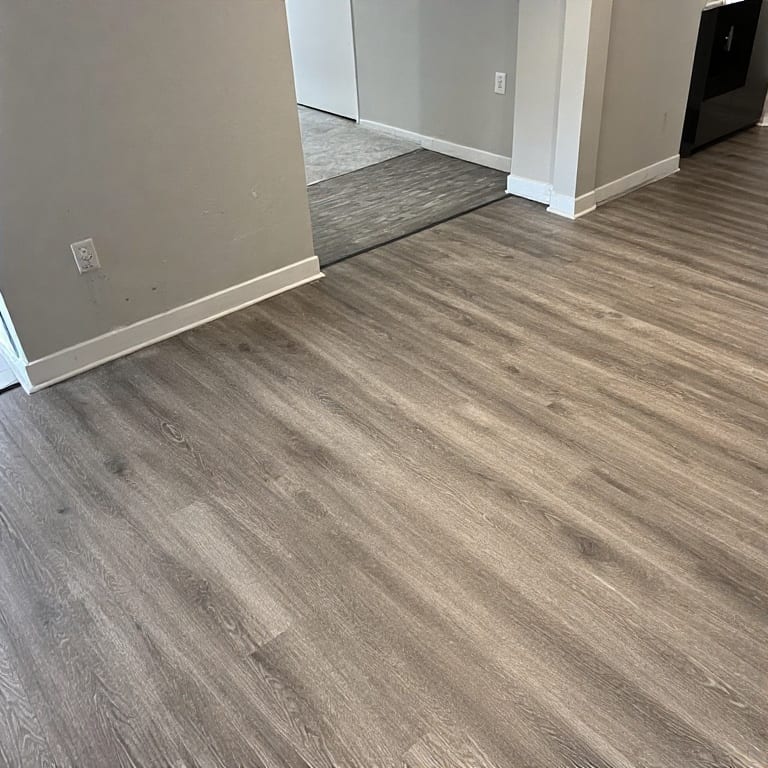
Flooring in Chicago homes must perform under demanding environmental conditions. From sub-zero winter temperatures that dry out natural wood boards to humid summers and tracked-in ice melting salts, choosing the right material ensures long-lasting beauty without warping, cupping, or moisture damage.
Here is a practical comparison of the leading residential flooring materials for Chicago homes in 2026.
2026 Chicago Flooring Cost & Durability Comparison
| Flooring Material | Total Installed Cost / Sq. Ft. | Moisture Resistance | Durability & Lifespan | Ideal Rooms |
|---|---|---|---|---|
| Solid Hardwood (Oak / Maple) | $10.00 – $18.00 | Low (Susceptible to moisture) | 50–100+ yrs (Can sand 4–6x) | Living rooms, dining rooms, upper bedrooms. |
| Engineered Hardwood | $9.00 – $16.00 | Moderate (Dimensionally stable) | 25–40 yrs (Can refinish 1–2x) | Condos, concrete subfloors, main floor living. |
| Luxury Vinyl Plank (LVP / SPC) | $5.50 – $9.50 | 100% Waterproof | 20–30 yrs (Scratch resistant) | Basements, kitchens, mudrooms, rental units. |
| Porcelain / Ceramic Tile | $11.00 – $22.00 | 100% Waterproof | 40–50+ yrs (Heated floor compatible) | Bathrooms, entryways, laundry rooms. |
Choosing the Right Floor by Room & Chicago Home Type
1. Basements & Lower-Level Living Areas
- Top Choice: Rigid Core Luxury Vinyl Plank (SPC) or Porcelain Tile over an Uncoupling Membrane.
- Why: Chicago basements experience fluctuating sub-slab humidity. SPC vinyl features an inorganic stone-plastic composite core that never swells, buckles, or harbors mold when exposed to concrete moisture.
2. High-Traffic Entryways & Mudrooms
- Top Choice: Large-Format Porcelain Tile (PEI Class 4 or 5).
- Why: Chicago winter street salt and slush rapidly degrade polyurethane wood finishes. Porcelain tile is impervious to moisture and chemical salt etching.
3. Classic Bungalows & Living Rooms
- Top Choice: Site-Finished Red or White Oak Hardwood.
- Why: Authentic solid hardwood preserves historic bungalow and greystone character. When installed over a sound subfloor with proper expansion gaps, oak floors can be sanded and re-stained multiple times over decades.
4. Condominiums & High-Rise Living
- Top Choice: Engineered Hardwood with Acoustic Sound Underlayment (IIC/STC 72+).
- Why: Chicago condo associations strictly enforce impact sound transmission standards between units. Engineered wood installs effortlessly over concrete slabs with specialized sound-dampening acoustic pads.
Frequently Asked Questions
Can you install radiant floor heating under hardwood?
Engineered hardwood is generally recommended over solid hardwood for radiant floor systems because its multi-ply cross-grain construction resists shrinking and gapping during winter heating cycles.
How long does a whole-home flooring installation take?
Replacing flooring in an average 1,500 sq ft Chicago home typically takes 3 to 5 working days for luxury vinyl plank, or 5 to 8 working days for site-finished hardwood including sanding and curing coats.
Schedule a Free Flooring Consultation
Budget Construction Company provides precision flooring installation across Chicago and the suburbs, including subfloor leveling, baseboard trim work, and turnkey cleanup.
- View our Chicago Flooring Installation Services
- Read our 2026 Chicago Flooring Cost Calculator Guide
- Request a Free In-Home Flooring Estimate or call (773) 283-9200.
Reviewed by the Budget Construction Company Editorial Team
Budget Construction Company has served Chicago homeowners since 1976. Project costs and requirements vary by property, scope, and municipality.