Skip to content
⚡ Financing & Payment Plans Available - Contact Us Today! ⚡
Chicago Siding Cost Guide

Chicago Siding Replacement Costs: 2026

Siding is a complete weather-management system, not just the visible panels. A responsible replacement budget includes removal, wall inspection, water-resistive layers, flashing, insulation decisions, trim, penetrations, and repairs discovered after the old exterior is removed.

Whole WallSystem Approach
3 MaterialsCompared Clearly
10%–15%Older-Home Reserve
Planning the Work

Price the wall assembly, not just the siding panel.

Two proposals using the same brand can differ dramatically when one includes careful flashing, housewrap integration, trim, soffit work, and substrate repairs and the other does not.

Exterior Investigation

  • Identify the existing siding layers and likely removal method
  • Inspect visible signs of leaks, rot, insects, and movement
  • Measure windows, doors, corners, gables, and penetrations
  • Review insulation, ventilation, and moisture-control goals
  • Confirm access, landscaping protection, and debris handling

A visual inspection cannot reveal every concealed condition. Older Chicago homes benefit from a clear unit-price or change-order process for sheathing and framing repairs.

Installation and Closeout

  • Remove siding without damaging adjacent assemblies
  • Repair the substrate before new weather barriers are installed
  • Integrate flashing at windows, doors, roofs, and transitions
  • Install panels, trim, soffits, fascia, and accessory blocks
  • Complete sealant review, cleanup, walkthrough, and warranty documentation

Good siding work manages water behind the finish. Caulk alone is not a substitute for layered flashing and drainage details.

Interactive Budget Planner

Build an early siding planning range

Select a home size, material tier, and wall condition. The result is a broad construction-planning range, not a proposal.

Early siding construction range

Planning range only. Home geometry, access, trim quantity, sheathing damage, code requirements, product specifications, and finish choices can move the actual price.

Material Comparison

Choose siding by performance, maintenance, and architecture

There is no universally best siding. The right choice balances the home, wall conditions, maintenance expectations, installation details, and total budget.

Vinyl offers a broad color range, lower maintenance, and typically the most accessible installed price.

Where It Works Well

It is a practical choice for many homes when properly detailed with compatible trim, flashing, and expansion clearance.

What to Watch

Thin panels, poor fastening, heat exposure, and rushed trim work can lead to waviness, noise, or premature damage.

Fiber cement provides a substantial painted appearance and strong dimensional stability, but it is heavier and more labor-intensive.

Where It Works Well

It suits homeowners seeking crisp profiles, paintable color, and an appearance compatible with many traditional Chicago homes.

What to Watch

Correct clearances, cut-edge treatment, flashing, fastening, dust control, and a qualified installation crew are essential.

Engineered wood siding combines wood-like texture with factory treatment and lighter handling than fiber cement.

Where It Works Well

It can provide deep shadow lines and traditional character with a faster installation profile on suitable wall assemblies.

What to Watch

Edges, penetrations, clearances, flashing, and the manufacturer’s finishing instructions need disciplined execution.

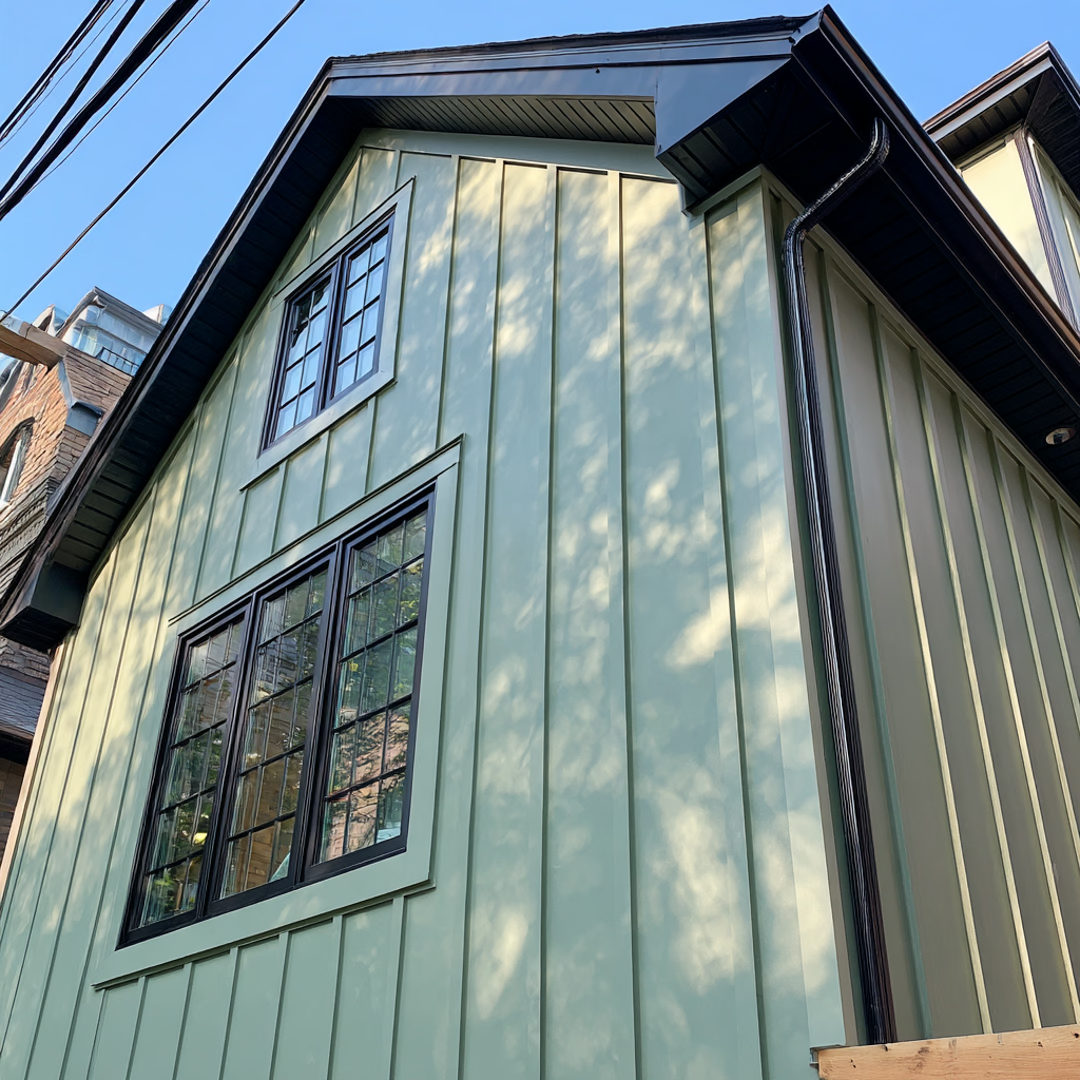
Installation Essentials

The hidden layers determine how long the exterior lasts.

The visible product gets attention, but these details control drainage, drying, and durability.

Wall Sheathing

Soft, delaminated, or missing substrate must be repaired so the new assembly has a sound fastening base.

Weather Barrier

Housewrap or another approved water-resistive barrier needs taped or lapped transitions that direct water outward.

Flashing

Windows, doors, roof intersections, meters, hose bibs, and vents require layered details—not surface caulk alone.

Trim + Venting

Corners, soffits, fascia, intake ventilation, and accessory blocks should be coordinated as part of one exterior system.

Financial Planning

Where a complete siding budget goes

These allocations help reveal whether a proposal covers the full wall assembly or only the most visible work.

Budget CategoryPlanning AllocationWhat It Includes
Removal, Protection, Disposal10%–18%Site protection, siding removal, lawful debris handling, and access equipment.
Substrate and Weather Control15%–25%Sheathing allowance, air and water barrier, flashing membranes, tapes, and transition details.
Siding Material and Installation35%–50%Panels, fasteners, starter courses, layout, cuts, field installation, and manufacturer-required details.
Trim, Soffit, Fascia, Openings15%–25%Corners, window and door trim, utility blocks, gables, soffits, fascia, sealants, and finish work.
Concealed-Condition Reserve10%–15%Rot, insect damage, missing sheathing, framing corrections, and transition repairs found after removal.

Compare siding proposals line by line

Ask each contractor to identify products, details, allowances, and exclusions in writing.

  • Is complete removal included, or will new siding cover an existing layer?
  • What exact siding profile, thickness, finish, and manufacturer are specified?
  • How are housewrap, flashing, and opening transitions handled?
  • What is included for sheathing or framing repairs?
  • Are soffits, fascia, gutters, shutters, meters, fixtures, and vents included?
  • How will landscaping, neighboring property, and walkways be protected?
  • Who registers and provides product and workmanship warranty information?

Siding replacement FAQs

Can new siding be installed over old siding?

Sometimes, but covering an old layer can hide damage, complicate flashing, change opening depths, and produce an uneven fastening surface. Full removal offers the clearest view of the wall condition.

Should windows be replaced at the same time?

Not always. Coordinating projects can improve flashing integration, but sound windows may remain. The contractor should inspect opening conditions and establish how new siding ties into existing windows.

What causes the largest price changes?

Home size and geometry, material selection, multiple existing layers, access, trim complexity, wall damage, soffit and fascia work, and the number of windows and penetrations are major variables.

Ready to evaluate your home’s exterior?

Budget Construction Company can inspect the visible conditions, discuss material options, and prepare a siding scope based on the complete wall system.